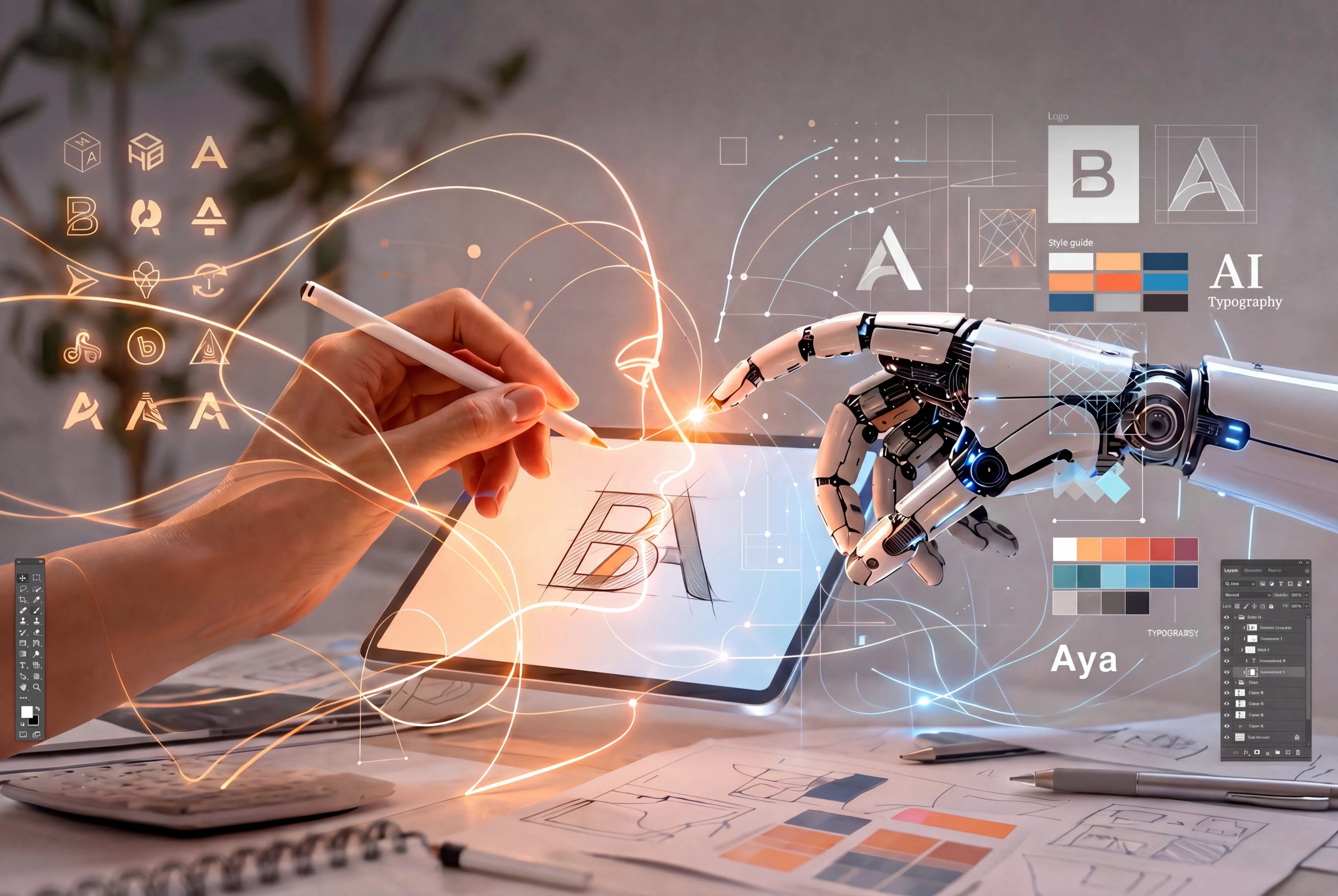
It is not about picking a side. It is about designing the relationship.

Would you like to know more?
Get in touch with Anwar
Stay Connected
Curious about how branding and consumer psychology intersect? Subscribe to our newsletter for expert insights and strategies built around our core service pillars: identity, development, and 3D & Ai technology. Let’s help your brand forge deeper connections.
Most of the AI conversation in design still gets framed as a side to pick. You are either all in, ready to generate everything, or you are holding the line and protecting the craft. Both feel principled. Both miss the more useful question, which is not whether to use AI but what the relationship between human judgement and machine should actually look like.
Going fully generative, with no hand on the work at any point, is not really a strategy. It is a shortcut, and shortcuts tend to flatten the things that make a brand worth paying attention to. Refusing to touch the tools at all is its own kind of shortcut. The interesting work sits in the middle, in deciding what each side is for.
Part of why that middle is hard to reach is that the tools do not behave the way brands do. A brand identity is a connected system: a colour, a strategy and a logo only mean something in relation to each other. Most AI tools are the opposite, built for one prompt, one output, one tool at a time. That mismatch is what makes working with them feel both inconsistent and exhausting. It is the tool fatigue we wrote about a while back, where every new model is another tab, another login, another thing you are apparently behind on.
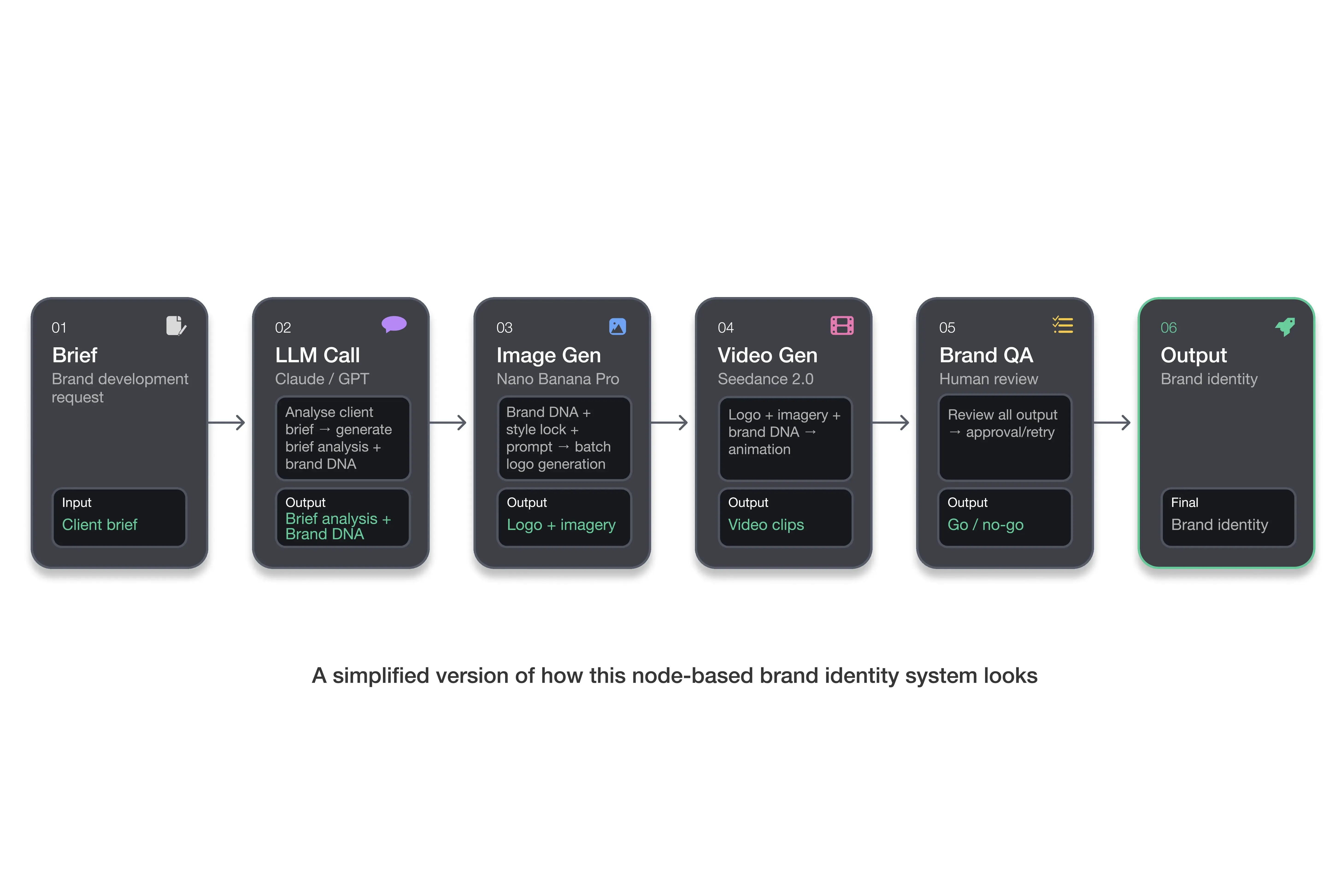
So we built something to close that gap. Not another generator, but a co-creation node-based system for brand development: a structure that connects the different AI tools into one place and sends each part of the work to whatever handles it best. Picture a brand built from connected nodes, where colour logic, tone, typography, imagery and the strategic thinking behind them all hang together and feed each other. The designer co-creates at every step rather than handing the brand over.
What surprised us most was how much of brand development can actually be co-created this way, and not just the visuals. A lot of the research, the strategic groundwork and the early positioning moved faster and held together better when the right tool was doing the right job and a person was steering the whole time. That is the part people underestimate: with the structure in place, strategy and positioning become something you build with the system, not something the system takes off your hands.
What stayed firmly human was judgement. The system would happily generate a hundred on-brand directions and have no opinion about which one was good. The designers did, instantly, every time. Part of that judgement is knowing when not to reach for the tool at all, because something being possible to generate does not make it the right way to make it. The gap between correct and right is small to describe and enormous in practice, because right is the whole point of a brand. The machine was fast. It was not discerning. Vision cannot be prompted.
This is also where the edge has moved. When anyone can produce at volume, volume stops being the thing you win on. What is left is taste, and a real understanding of the brand and the people it is speaking to, the part that gets felt even when no one can point to it.
And there is the question of ownership. When a tool generates so much of the surface, designers start to ask whether the work is still theirs. The ones who felt it was were the ones who had shaped the rules, set the constraints and made the calls. The making had moved upstream, not disappeared. Authorship now lives in the why, not the rendering.
Put it together and the point is not that AI wins, or that the designer wins. They do different jobs. The system connects the tools and carries the structure. The person carries the judgement, the taste and the decision about where the line between them sits. That last part, designing the relationship rather than picking a side, is starting to look like the actual skill.
The Brink Perspective
This is the question we want to keep digging into: not whether to use AI, but how the relationship between human judgement and AI actually gets designed. And the only honest way to find that out is to try things. So we are experimenting with different co-creation methods and different ways of working alongside AI, seeing which ones hold up inside real brand work and which ones quietly fall apart.

More Than a Car: Designing the Spyker Lifestyle Online
Read this article
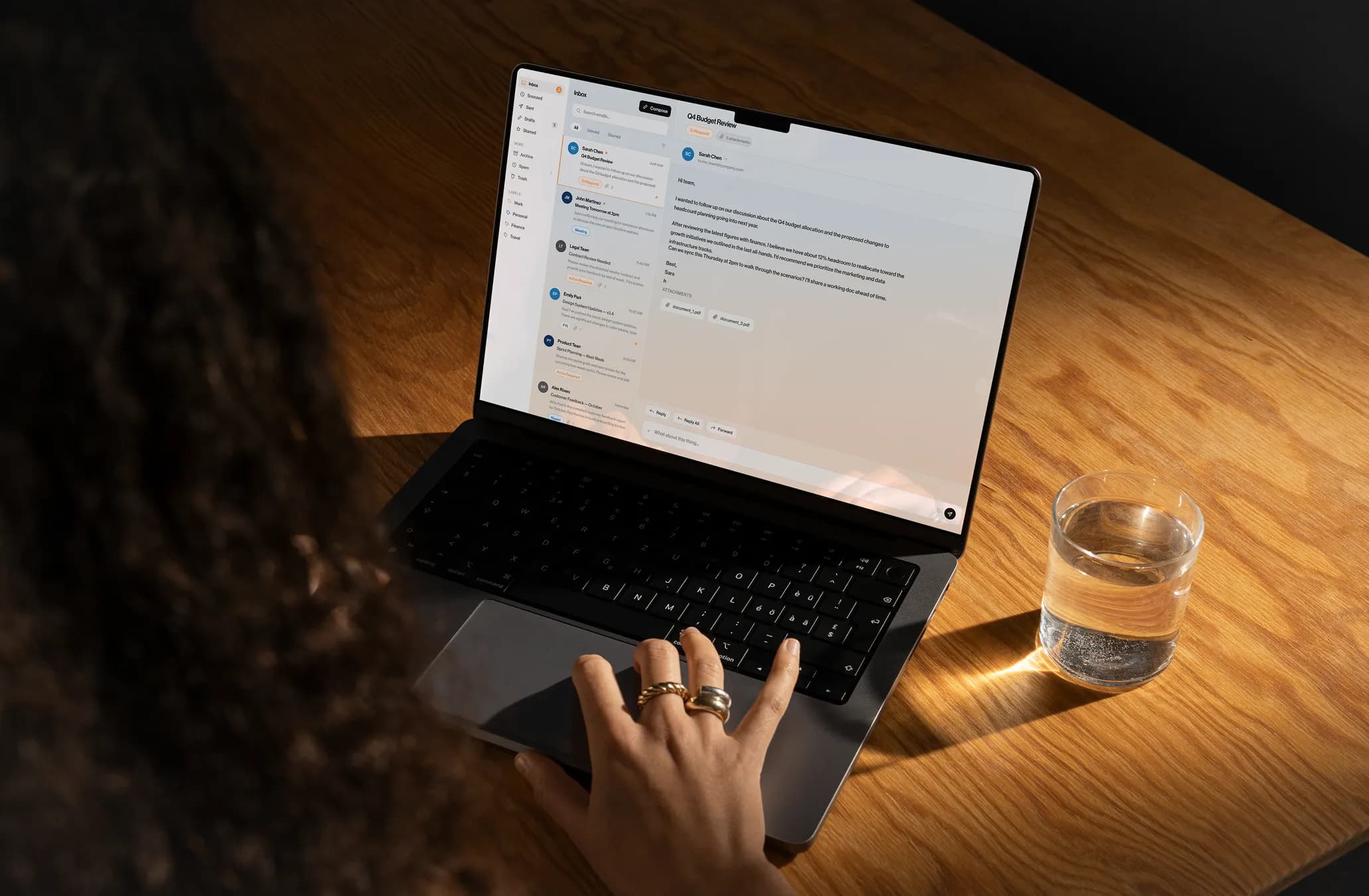
Why Work Still Feels Harder Than It Should and How AI Can Help
Read this article
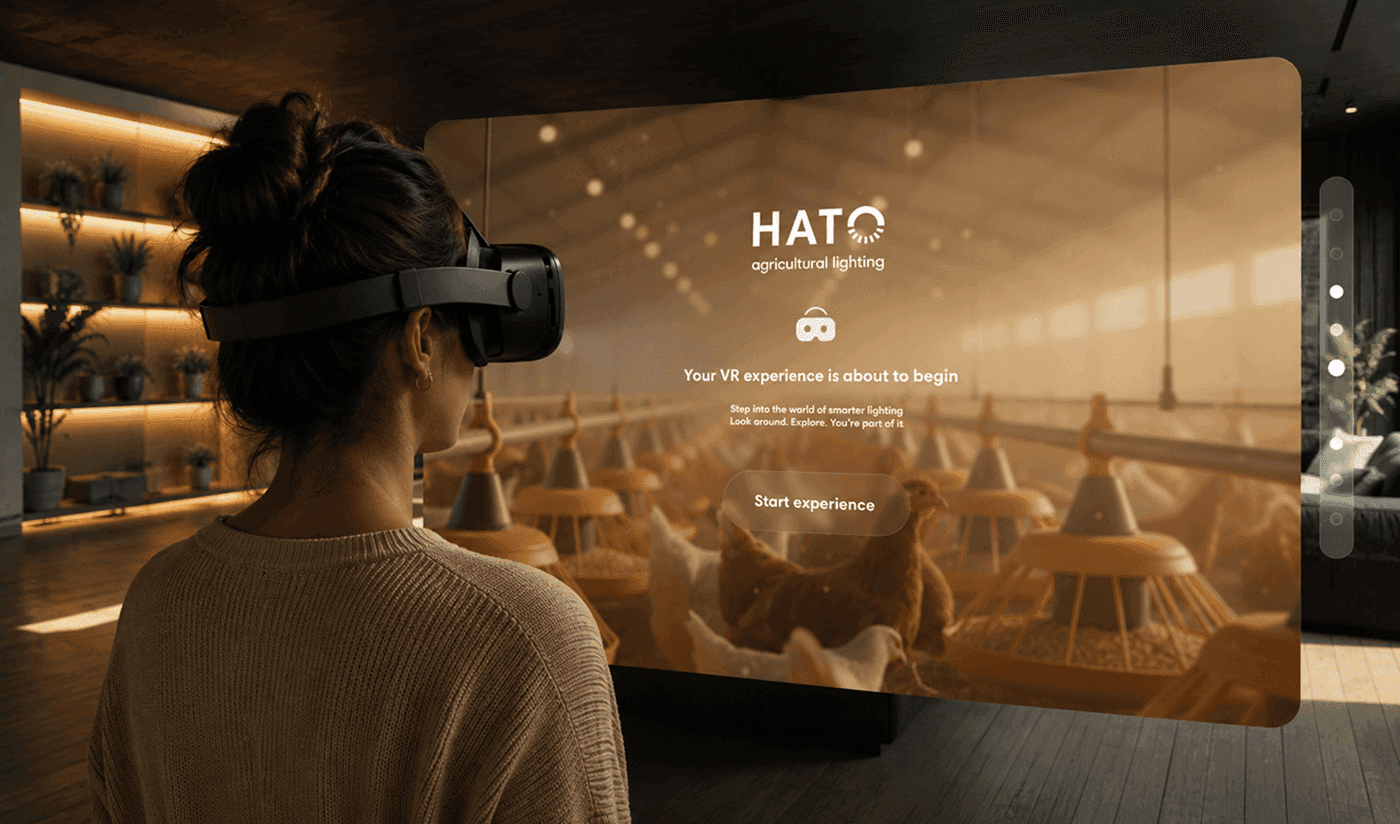
Seeing the World Through a Chicken's Eyes
Read this article