
From CAD Files to Photorealistic Worlds

Would you like to know more?
Get in touch with Django
Stay Connected
Curious about how branding and consumer psychology intersect? Subscribe to our newsletter for expert insights and strategies built around our core service pillars: identity, development, and 3D & Ai technology. Let’s help your brand forge deeper connections.
A CAD file is built for precision. A photorealistic render is built for emotion. Between those two worlds lies one of the most important transformations in modern product visualization: turning technical engineering data into imagery people instantly connect with.
Today, brands no longer need to wait for costly prototypes or finished production runs to market a product. Advanced 3D rendering workflows make it possible to create launch-ready visuals long before manufacturing begins, accelerating campaigns, reducing production costs, and giving teams the freedom to experiment with materials, lighting, and environments without physical limitations.
But photorealism isn’t created by software alone. It’s the result of a carefully orchestrated process where engineering precision meets visual storytelling.
Building the Foundation
Every render begins with the CAD model itself. Unlike polygon-based models used in gaming or animation, engineering CAD files are typically built using mathematically precise NURBS surfaces. Rendering engines, however, interpret geometry differently. To calculate realistic light, reflections, and shadows efficiently, they rely on polygon meshes.
That means every successful rendering workflow starts with conversion and cleanup. Hidden screws, internal structures, unnecessary geometry, and dense meshes all increase complexity without improving the final image. Simplifying the model creates cleaner scenes, faster render times, and more control later in the process. From there, the geometry is tessellated into polygons with enough detail to preserve smooth curves while remaining efficient enough to render realistically.
This technical preparation phase is often overlooked, but it determines whether a render feels seamless or artificial before lighting and materials are even introduced.
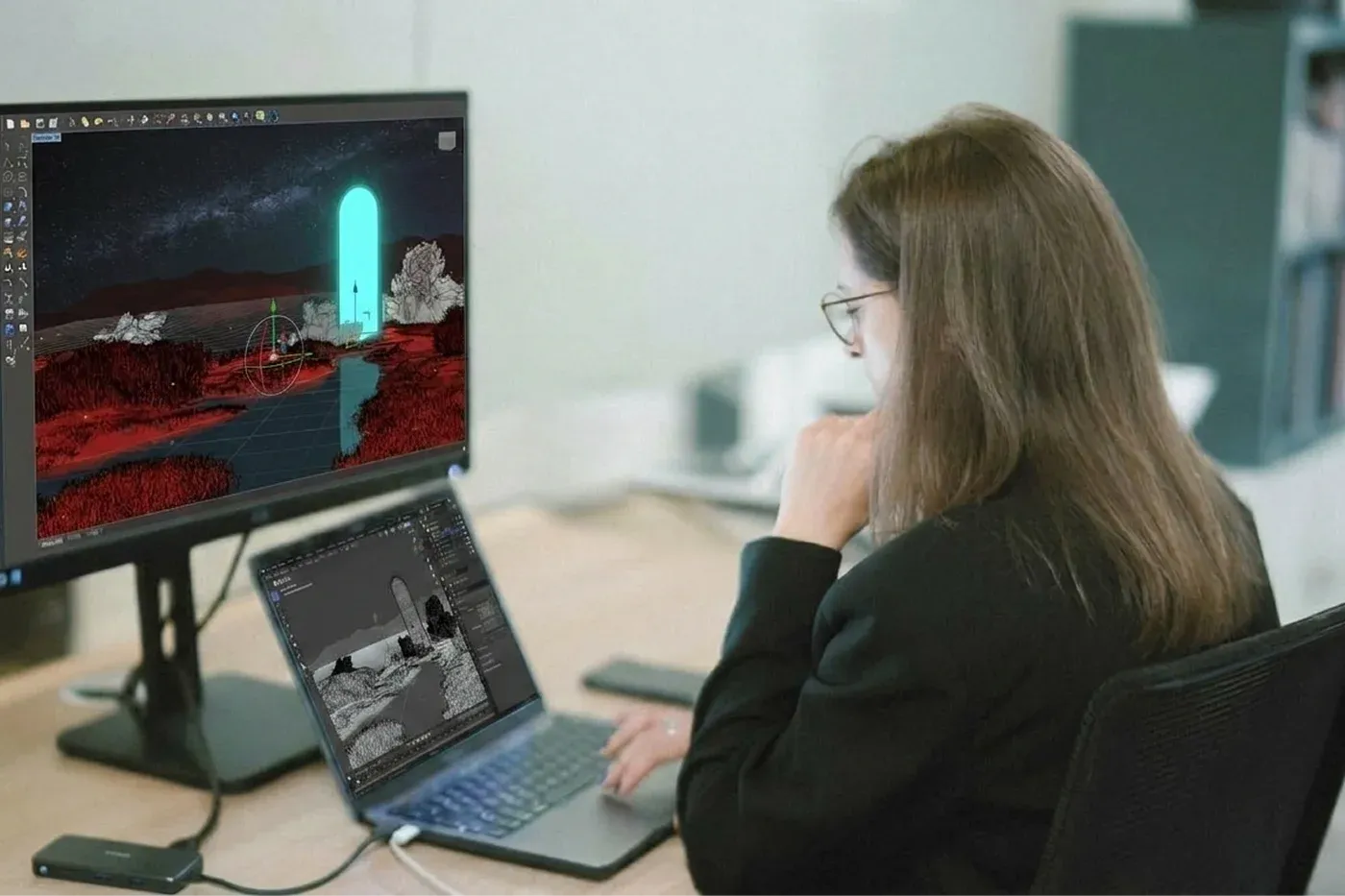
Turning Geometry Into Atmosphere
Once imported into visualization software, the focus shifts from engineering to perception. Materials and textures begin defining how the product feels before anyone physically touches it. Metals need believable reflections. Plastics require subtle roughness. Glass needs depth and refraction.
Modern rendering pipelines rely heavily on Physically Based Rendering (PBR), allowing materials to react to light in ways that closely mimic reality. Ironically, realism often comes from imperfection. Fingerprints, dust, brushed metal grain, soft edge wear, and micro-scratches are what separate a believable render from something that feels obviously computer-generated. Perfect surfaces rarely exist in the real world, and audiences instinctively recognize that.
Lighting then becomes the defining factor in whether a render feels cinematic or artificial. HDRI environments provide natural reflections and realistic ambient lighting, while studio-style setups offer complete creative control through carefully positioned key, fill, and rim lights. At this stage, rendering artists stop thinking like engineers and start thinking like photographers.
The Role of Composition
The same applies to camera work. Longer focal lengths create flattering proportions, shallow depth of field directs focus, and carefully framed angles transform technical models into emotionally engaging visuals. The difference between a “3D model” and a premium campaign image often comes down to how the virtual camera behaves.
Even after rendering, the process continues through post-production. Color grading aligns visuals with the brand identity, sharpening emphasizes material details, and layered compositing gives artists precise control over shadows, reflections, and atmosphere. This final polish is where visualization evolves into storytelling.

The Brink Perspective
As GPU rendering, AI-assisted denoising, and real-time visualization technologies continue to evolve, photorealistic rendering is becoming faster, more accessible, and more powerful than ever before. But the core principles remain unchanged: clean geometry, believable materials, thoughtful lighting, and intentional composition.
At The Brink Agency, we see rendering as more than image production. It’s the intersection of engineering, design, and emotional communication. The most effective renders don’t just showcase products, they shape perception, build anticipation, and create desire long before a product physically exists.
Because in a digital-first world, realism is no longer just a technical achievement. It’s a brand experience.

More Than a Car: Designing the Spyker Lifestyle Online
Read this article

Why Work Still Feels Harder Than It Should and How AI Can Help
Read this article

Seeing the World Through a Chicken's Eyes
Read this article